

◑ Clay Factory
“Half the Truth is often a great Lie.” – Benjamin Franklin

We’re all born into the world as balls of clay. We’re soft, warm, becoming. Clay babies, caught in an involuntary cycle of becoming until our end.
The world you’re born into looks different depending on where you are from—different economy, language, art, government—but they all have the same factory rooms: identity, family, schools, groups, and nation.
Everyone’s clay is soft in their early years. You can press your thumb into it and watch it yield into different shapes magically. Even a decade later, you can check — still warm underneath. Alive.
The factory doesn’t like this. Soft things are hard to stack, hard to ship, and hard to sell. The factory needs you hardened. Fast and optimized. But not broken, so be careful. It needs your consent.
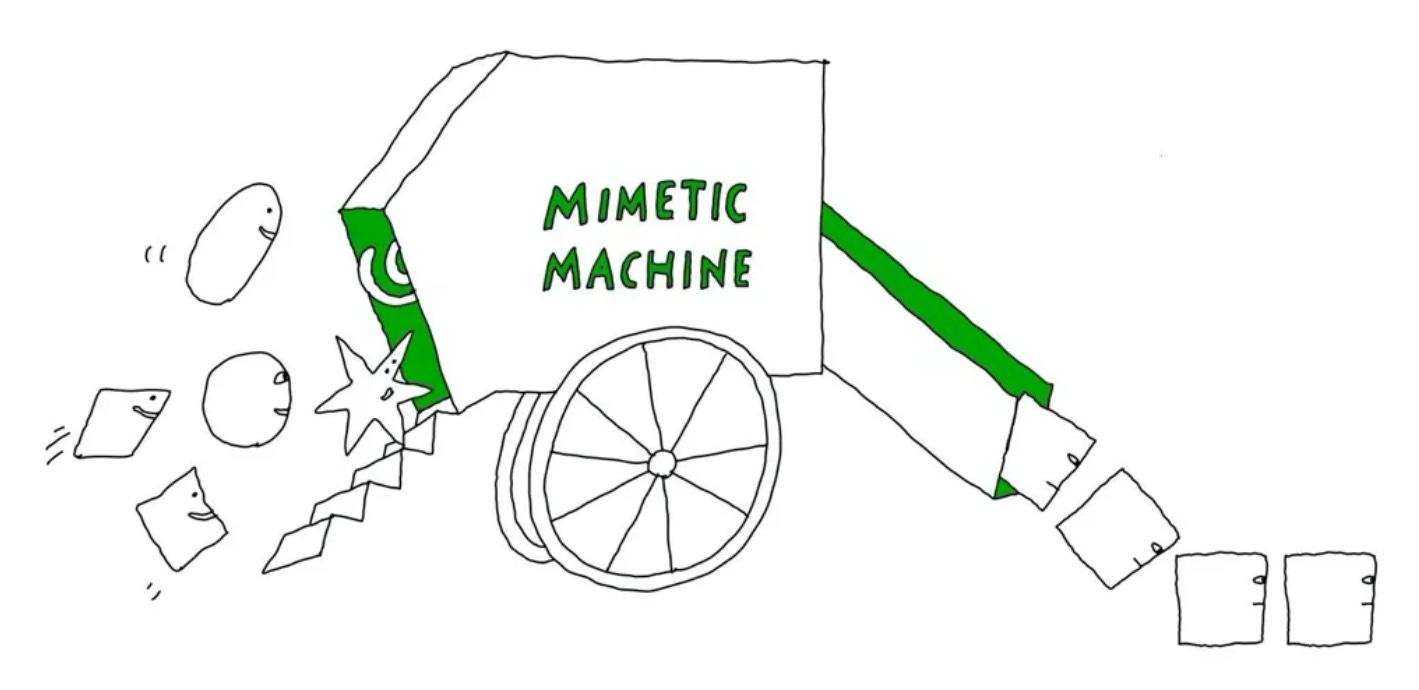
It teaches the clay babies while they’re still warm: Dream. You can be anything. Then, year by year, it introduces the molds...
The factory says: Finding a shape where you belong is freedom. This is the goal.
The factory says: Your one true shape is how we see you—your color, your body, your voice, your questions, and future.
As a result, some shapes appear more valuable than others. Some are exiled and bullied for not fitting the geometry as irregular.
Fearful of being irregular.
Most clay babies either harden to find a shape that fits fine, break the rules, or give up, and take what little happiness they can get. They shake hands and smile at the promise of belonging—faking it until the end.
One little clay baby tried her very best to find a shape. She didn’t want to be left behind. She didn’t want to be invisible. She wanted company— other shapes pressed close, the vibrant sound of laughter she could join without asking permission first. So she pressed herself into the molds her parents told her were hers to take. At home, they all fit just fine. Felt perfect maybe.
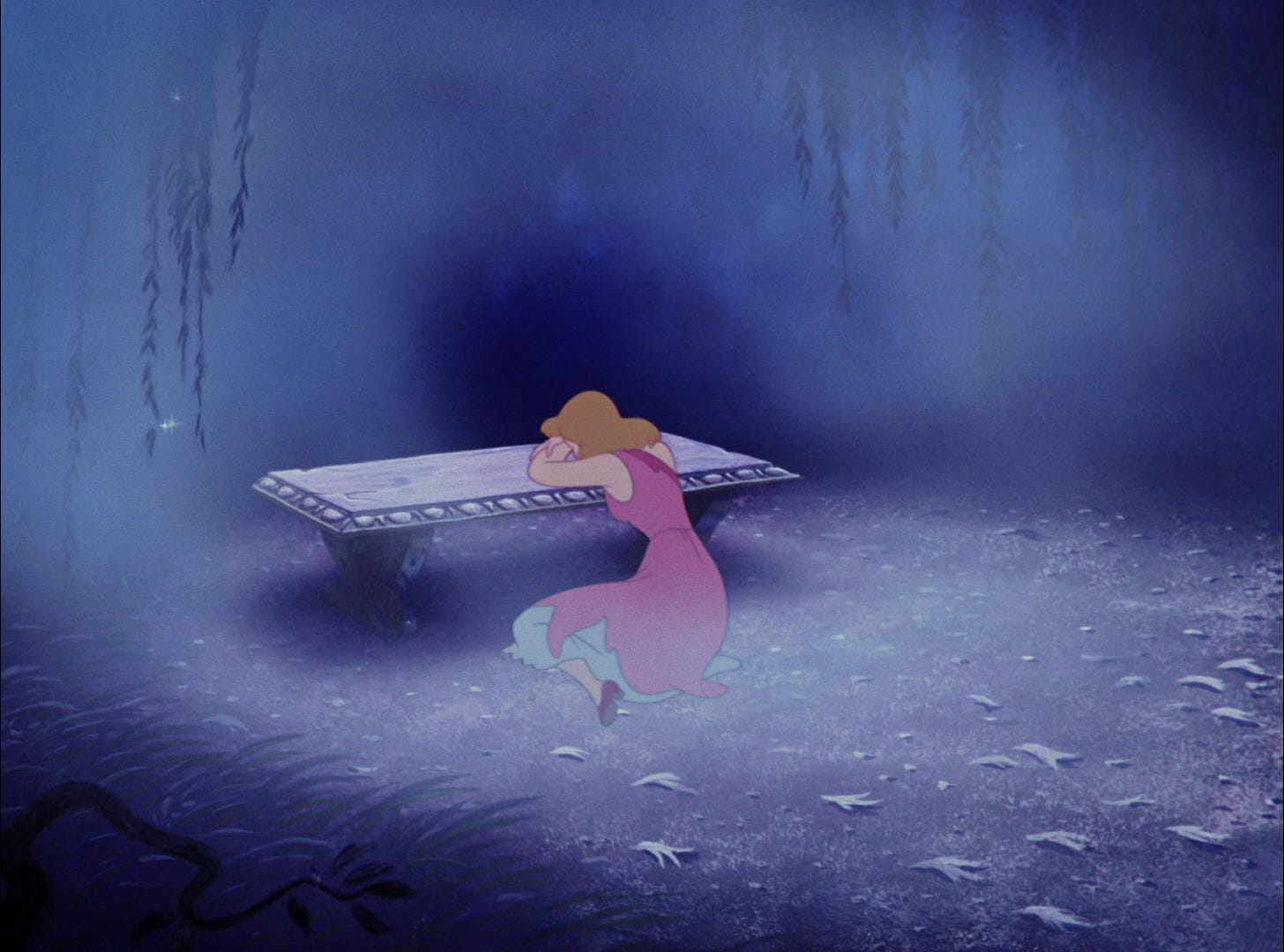
But on the outside… It hurt. It muted her sound, got stuck on her hair, in her eyes, burning her skin, erasing her dots, sharpening her lines. That mold couldn’t have been right, especially when the other shapes were saying it was so wrong for her.
The longer she stayed in the factory, the worse it became.
She desperately tried to mold her clay fast—and it began to mold her. Her shape “friends” would always say what was right for her. With new friends came new molds. Then another. And another.
True chameleon she became.
Each mold she collected turned her into a spotlight. The shapes watched her light everywhere she went.
“Do you see that-
what isss that.”
She couldn’t escape it, like Rudolph, useful only for how strange she glowed with such ugly face.
She needed to find a shape asap. When it hurt, she stayed still.
Breathe in. Beauty is pain. Keep it in, they said.
The burn in her nostrils. The ache in her eyes from daily 8-4 shifts at the Clay Factory. When it scraped parts of her off, she grew suspicious…when she sat alone each day, shapes walked by and applauded her growing up. Though she saw the cracks, her light grew dimmer day by day. Her temperature dropped by degree, year by year.
She couldn’t be strong anymore. Her mother taught her a lesson that’d helped her: Pain is required to fit into a shape. The world will tell you when it’s enough—when they accept you.
Then they asked her to sand down her brain. Thinking was causing her pain. Her eyes were enlightening her brain. She realized they’d been training her for this all along—every day at the Clay Factory, small sacrifices, small inconveniences, small pieces of herself handed over in exchange for belonging.
All to maintain the Clay Factory for producing more shapes.
She took the sander, hesitantly; in exchange for gold stars, belonging, and praise. It hurts less to surrender than be alone forever, she told herself.
With, Fear in the abyss. She had hope in the sky. Gold Stars sing the most beautiful songs. They are center of their solar system (on paper), burning bright, pulling everything into orbit. But becoming one means having five edges pulled out, one by one. It means being burned crisp, blown hollow, painted, then exploded. Not everyone survives it, but the Gold Star sticker you earned?
Sure seems worth it to be seen.
Little clay baby believed she could do it all because all had already been done to her. She’d been bleached, burnt, trimmed, sanded—and yet she still shined brighter than the sun. Some shapes paid for the Gold Star mold, but she did it naturally—she’d been one from birth, glowing on the inside, invisible on the outside. Her vivid soul wasn’t enough proof because her warmth, and light didn’t shine like the models. So the Gold Stars turned her away. She knew who she was inside, but it didn’t matter.
So when they called her name, Hexagon, she didn’t correct them. She rose, smiled big and shined crooked.
Here I am, Hexagon.
She quickly crunched herself into the Hexagon mold. When she pretended to like the shape they saw her as, the shapes stopped pushing her around. They called this a success. They said they found a place where she belongs—be happy.
She looked at the other Hexagons. She saw them happy outside, and crying inside their nooks each night. Sharp to the squares, smitten with the circles, in conformity with hexagons—yet still hollow to their core. She asked around to see if anyone would try a different mold, and they all said yes. They would never. They don’t care whats inside. They are fine with how the world sees them. So she was still lonely inside. Even surrounded by Hexagons who looked just like her on the outside.
In isolation, she discovered something: All shapes were made of the same substance. There was a time they all looked the same—warm clay. And there’s a time coming when they’ll all look the same again—dust in the end.
She knew she could transform. Dark as black empty space or bright as the sun. An acute triangle or serious rectangle. Slim as a sharp line or deep as a cylinder. with Trapezoids she had all the fun. and Ovals were the wisest in the geometry. She wanted to be with all the shape groups, not just one.
She was getting bored.
Imagining being outside her mold, she missed the feeling of her own hands pressed into her clay. She couldn’t morph her clay into the shapes she wanted. She missed deciding where she curved, where she stayed sharp, where she let herself crack open.
She missed the fun of becoming.
Molding yourself, the factory taught her, was taboo and dangerous. The risk of creation? Not fitting in anywhere. Why struggle with imagination to shape yourself, they said, when the factory can tell you who you are? The factory can guarantee your future, if you just consent.
So she stayed in the Hexagon mold. She crouched small, safe, and surveilled. But in that abyss of loneliness—not being seen for real, not being able to share what was true—she remembered something she’d felt once before, long ago, when her clay was still warm: every irregular shape is still a shape.
The fear of not becoming a shape was always a lie.
She was a shape from the beginning. Freedom wasn’t escaping the Clay factory. Freedom was remembering that all clay naturally has the ingredients to shape itself.
All shapes are made of the same substance. The only difference is the mold you choose to let arrange you.
Are you afraid of your own hands to mold yourself?
If so, there goes your freedom.