

All in my head: Creativity & Consciousness
I have a temporary fix for both scientists and spirituals (s^2;)

Yayy, let’s clap for our physics-inclined SST fans! I finally found a paper through Ayana’s Newsletter that uses quantum physics to explore and even justify the experience of free will. I don’t think they meant to debunk claims that free will is an illusion, but for me, it abstractly shows how compatibalist views can survive in the world of qualia.
Let’s remember that the job of any good philosopher is to test intuitions, the job of technical philosophers (who prioritize tangible impact), is always to test intuitions for practicality. And depending on your background, you might feel a fierce conviction that we either have, or absolutely don't have, free will. But what if the answer lies not just in philosophical debate, but in the very fabric of our brains itself?
The Intuitive "Could Have Done Otherwise" Feeling is Fundamental
We all know this feeling, don't we? That powerful conviction that, when faced with a decision, we genuinely could have chosen differently. As the paper points out, for many, free will is this belief that "I could have done otherwise" and is a core aspect of our lived experience. As compatibilists, we affirm that this intuition deserves a serious explanation, even if it has deterministic roots.
Compatibilism is the philosophical view that free will and determinism are mutually compatible and can coexist.
Our Brains Are Wired to Perceive "Nearby Alternatives"
The paper suggests that our brains, with their extraordinary energy efficiency, aren't just processing the single reality that unfolds. Instead, they're subtly attuned to "nearby counterfactual worlds" – those slightly different versions of reality that were just a hair's breadth away from our actual choice. Imagine standing at a crossroads, we often do. The paper explains that even after you choose a path, your brain registers a "what if" scenario – "a world where I spent an extra fraction of a second looking right" that "resembles the actual world in almost all respects, and therefore seems extremely close to the actual world." This is what makes the act of choosing feel incredibly concrete and meaningful.
Quantum Physics Provides a Physical Basis for This Awareness
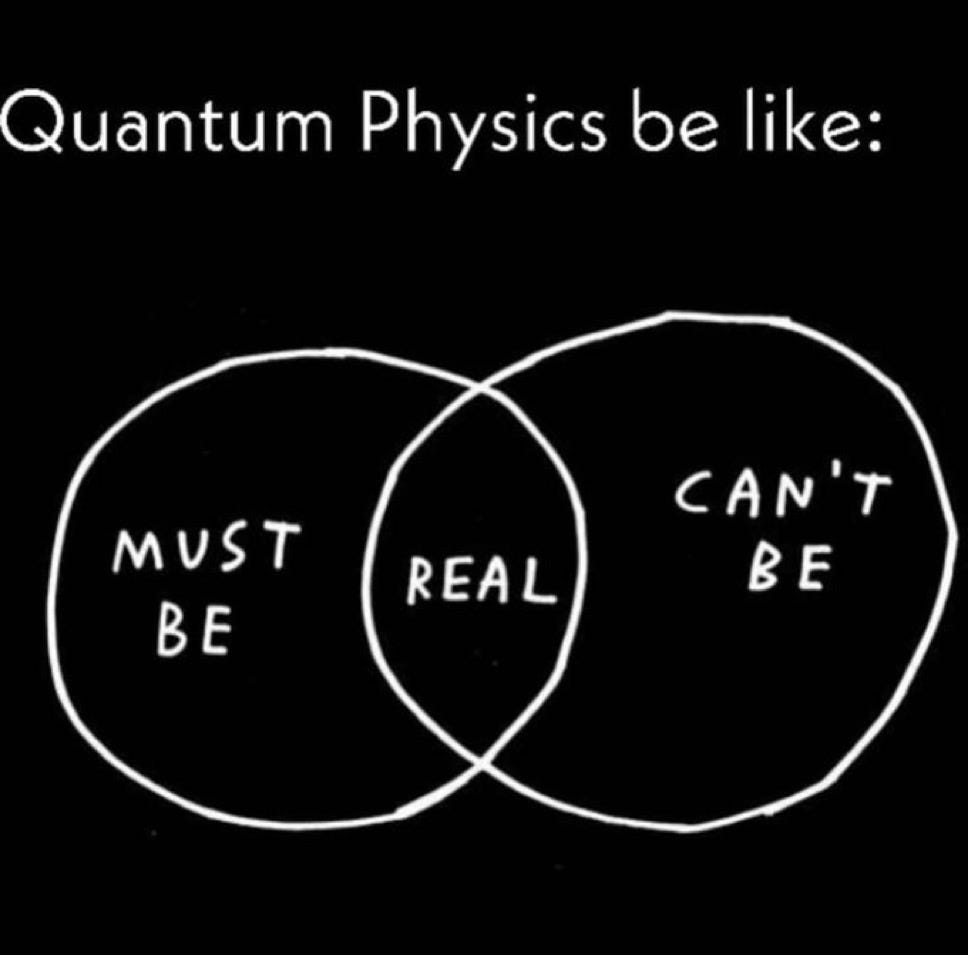
Here's the mic drop moment for compatibilists, the paper offers a stunning physical basis for this awareness by proposing that "our ability to perceive nearby counterfactual worlds arises from the fact that (for reasons of energy efficiency) quantum dynamics plays a central role in the operation of our neural networks." In the quantum realm, multiple possibilities can coexist until a definite outcome is observed. If our brains are tapping into these quantum principles for their efficient function, then our conscious experience of choosing isn't an illusion. The experience of free will is a physically necessary part of how our remarkably energy-efficient brains navigate a world filled with infinite possibilities.
Now, is free will real? Do our choices truly have meaning?
As a technical philosopher who tries to keep things practical, my answer is yes— at least in the ways that matter most.
(trying to answer these heavily debated questions (mysteries) objectively is ego tbh)
Look, I don't know if every single decision is absolutely undetermined or determined down to the last particle. But in the metaphysical world, the world of our lived experience and what makes us human—free will isn't just real, it's physically necessary. Even not choosing is a choice, isn't it? If you decide, for whatever reason, that your deliberations are just an illusion, then you're free to live your life that way (or “unfree to” lol).
But I'd argue for something different. If, as that paper suggests, our brains are literally designed to weigh "nearby alternatives" and create that tangible sensation of "I could have done otherwise," then our choices are inherently meaningful. They aren't just predetermined outcomes; they actively shape our narrative, our identity, and our very perception of agency moving forward in the future. Even if the underlying processes are super complex and involve quantum randomness, the outcome tangibly is a conscious being who feels capable of making decisions that matter.
I recently told Sommaiya Angrish this, but a lot of abstract philosophy sometimes feels like bullshit to me. Not because the ideas aren't really interesting, but because they can get so far removed from how we actually live. What truly matters are the practical ways to live, and in my opinion, encouraging everyone to have agency over the things they can control most has the ultimate utility.
Think back to the paper's insights on creativity: it proposed that new ideas, those "Aha!" moments, arise from a synergy between two cognitive modes. One mode is a little "noisy" and open to randomness, allowing ideas to "literally arise stochastically without prior reason." The other mode is more focused and deterministic, taking those raw ideas and refining them.
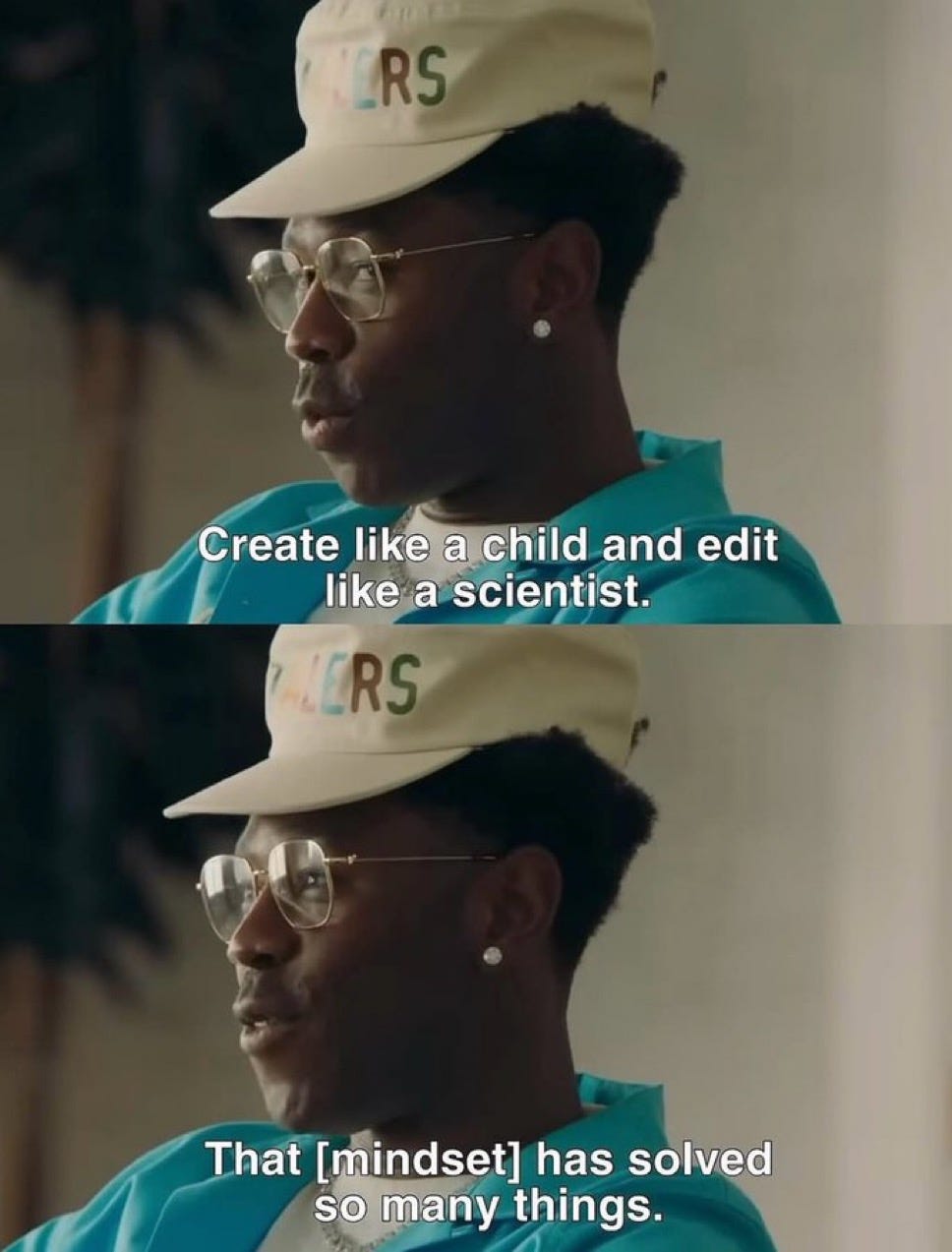
If you see yourself as merely a passive observer of predetermined events, then why bother engaging with the "noise"? Why strive to make sense of the randomness? The practical consequence of believing your choices are illusory is that you might disengage from the very process of meaning-making. You're less likely to actively seek out those "nearby alternatives" in the future or to attempt to "author the pages" of your life if you believe you have no power to.
But if you embrace the reality of your free will – the feeling that you could have done otherwise, that your brain is wired to perceive "nearby counterfactual worlds" – then you're actively primed for creativity. You take the random, the unexpected, the "stochastic" occurrences, and you apply your will to them. You choose to engage, to interpret, to connect, and to build. The creative process isn't just a spontaneous happening; it's a synergistic interplay between stochasticity and determinism. Your free will, your agency, is a part of the "determinism" that decides to act upon the "stochastic" insights, to "verify" the "illumination," and ultimately, to make something new and meaningful out of life's chaotic inputs.
This means living with free will empowers us to be the active architects of our narratives, and to continuously redefine our utility, making every choice a meaningful one. Let’s also acknowledge that this is scary, and a big burden.
But it’s also something you can see tangibly in reality: if you rob a bank, you’ll probably go to jail. If you robbed the bank as a delinquent trying to cause mischief, you might go to jail and be inspired for more crime. If you robbed the bank because you need the money, when you leave jail you might recommit because you still need the money. These scenarios are real and consequential, but they can’t bound people because there are still infinite ways a person could decide. Many people decide to be better and find a new way to never go to jail again.
The lesson is to live how you want, but live with meaning and knowing some things are in your control to change. That’s what agency is, and that is the utility of the free will experience.