


Hello hello People,
I recognize it’s controversial to argue art should say something these days, so I’m saying it. The definition of art I want to work with is what Gore Vidal put simply: “Art is energy shaped by intelligence.”
I’m not arguing all art is to be philosophically dense. But I watch so many messages shouted all throughout a work while people embrace only surface-level symbol and, in practice, reject the deeper poetry. That gap is interesting, and made me wonder: does art that fails to land the message to their audience fail, somehow? Does the work belong to everyone once it’s out in the world?
Audiences can struggle to pay full attention to art, and to its layers—or lack of. But coming from someone who's easily falls in awe, I miss the signal in the noise too sometimes. Let’s talk about it.
— step on through —
During a bus ride home after a high school football game, a teammate confided in the guy next to him—half-joking, half-threatening— that he’d always wanted to be a ballet dancer, but suppressed his dream out of fear of what his community would think. Time flows. He ended up with 5 Super Bowl wins and 1 MVP award. When I heard that story, I could only imagine what more he might have done with ballet in his back pocket. What reach... How many more he’d have inspired to pursue sports and dance, together. What unexpected power he might have discovered in himself. That—
We’ll never know. Because he never got to find out.
That’s the cost of boxing yourself into boundaries. What is the benefit of cashing in your freedom?
“It was life changing.”
“It helped me fall in love with myself.”
“It empowered me, made me believe in my dreams and possibilities.”
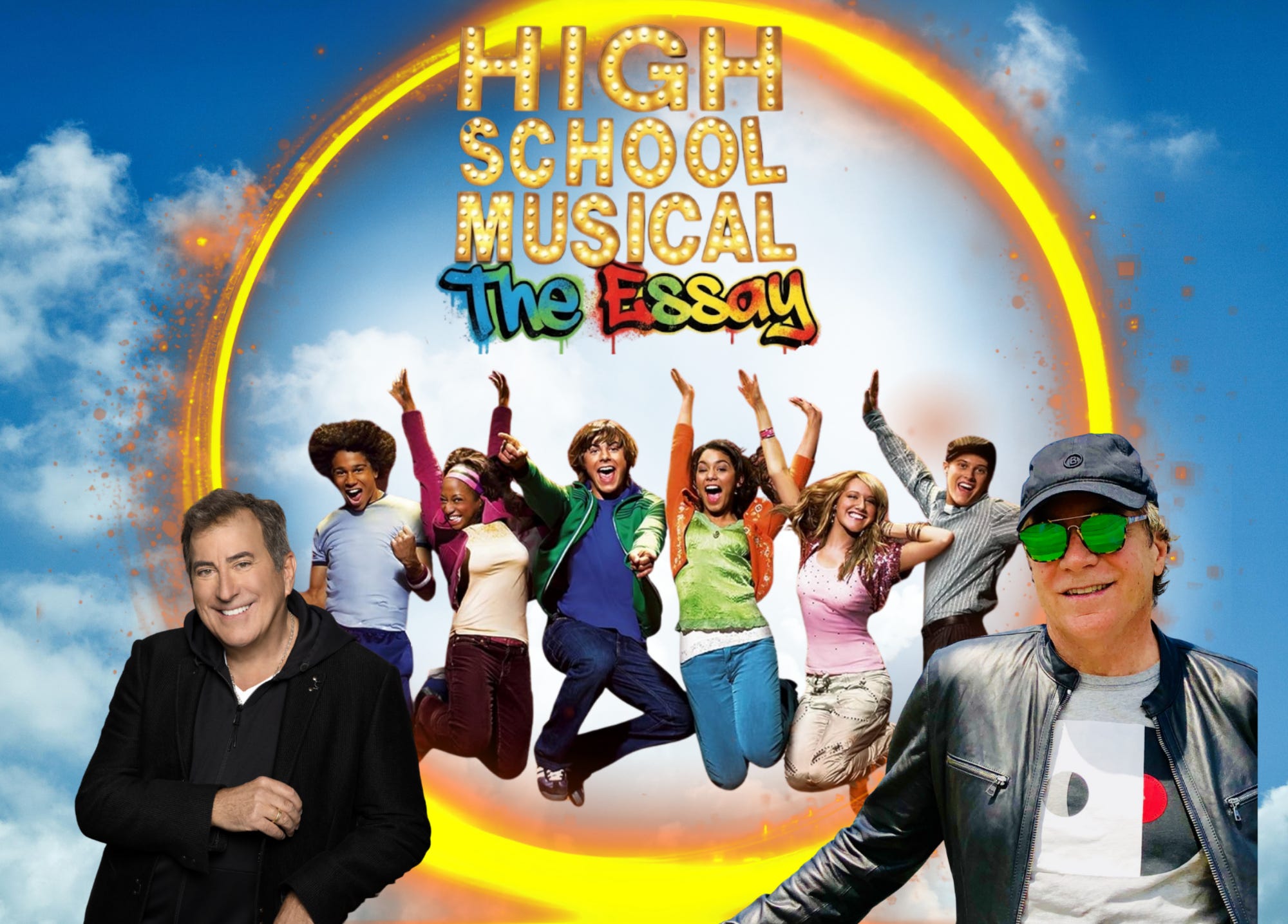
Kenny Ortega1 said, “There hasn’t ever been a place I’ve traveled to in all 20 years where someone hasn’t told me thank you.” Out of all that you consume in a day. When was the last time you stopped to say thank you to a creator? Has anything that you swiped on changed your life? Did you start to truly believe in yourself?
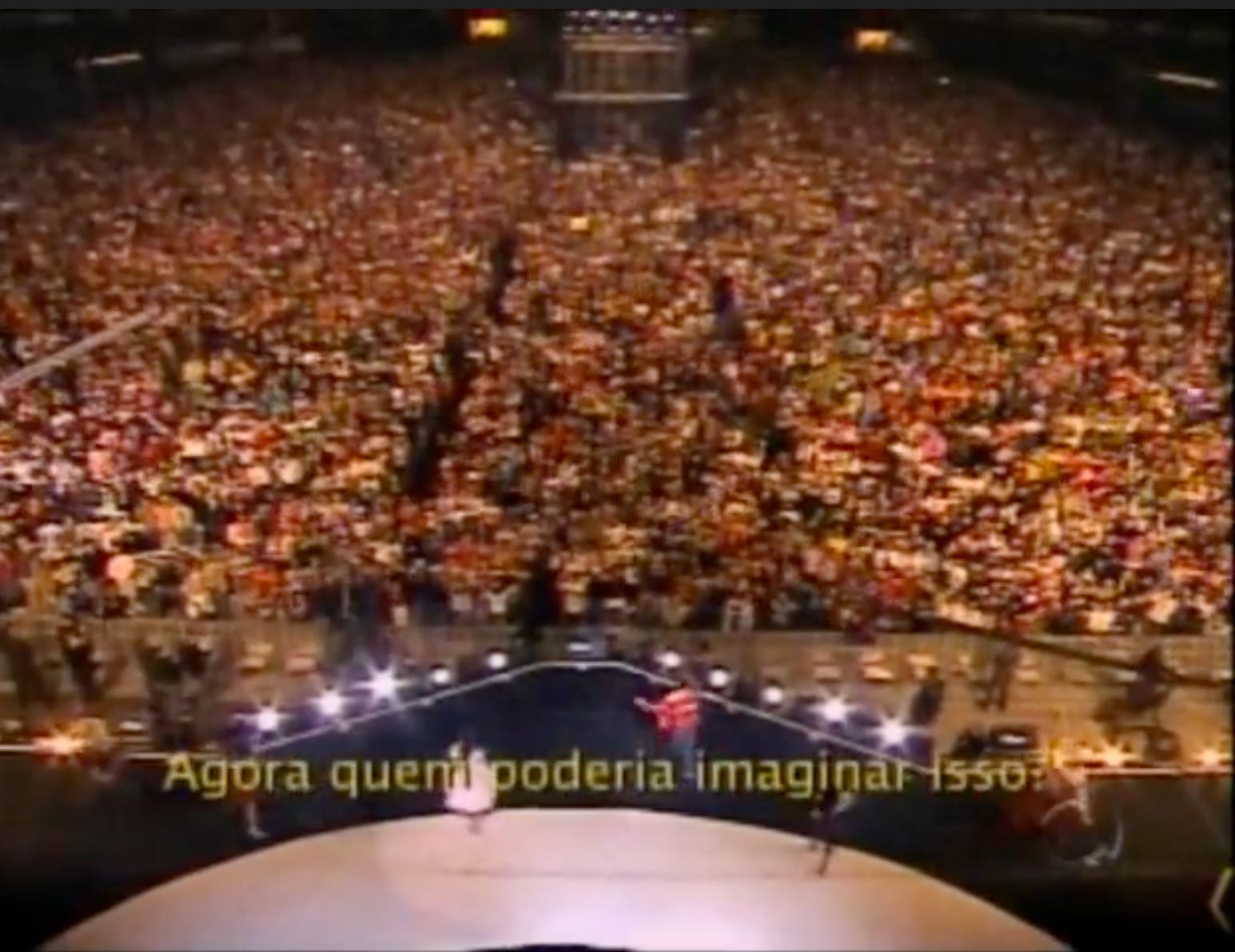
Peter Barsocchini2 wrote High School Musical for his 10-year-old daughter and her friends because of that bus ride conversation you read. With $4 billion in sales globally in their first 5 years, they transcended every expectation projected from a Disney Channel live action film. They were best selling album of the year selling 3.7 million copies, the first movie for sale on the iPhone, they broke Madonna’s merchandise record, sold out faster than every pop group, played stadiums across Central and Latin Americas with crowds of thousands…93,000 people all in one place singing and dancing along with the group in São Paulo, Brazil.
When High School Musical started advertising in 2005, recommendation algorithms as we know them didn’t exist yet. HSM was one of the last global monoculture hits. There was no algorithm to fragment viewers into categories of who might like it before premiere so everyone was shown the same ads on Disney platforms at the same time. Going from 7.7 million unique viewers on premiere to 300 million worldwide for HSM 3.
“It was a different world back then than we have now. People are more inclusive.3 If the star quarterback wants to join the school musical–nobody bats an eye. Back in 2000, 2002, people would have gone crazy.”
- Barsocchini sharing his mindset in 2004
That’s true. It was a different world in 2004. People are, in theory, more “inclusive” in 2026...Then again, there are just a lot more people, and a lot more ways to be a person. We have to look at the inputs to know whether we’re just making new mistakes with same causes. Do children and adults feel safe doing stigmatized things? Failing? Being awkward, or different? Is embarrassment normal friction? Can people face their deepest fears, and take real risks?
Let’s see.
The story starts at a ski resort, with two people who’d both rather be in their own world.
Take #1: Friction Invites Us to Act
The film opens at a ski lodge on New Year’s Eve. Troy and Gabriella are prompted to go to a teen party by their parents. They showed up, Troy looks for his circle and Gabriella looks for somewhere quiet to read. Randomness works its magic, and the karaoke host puts a spotlight on them and invites them onstage.
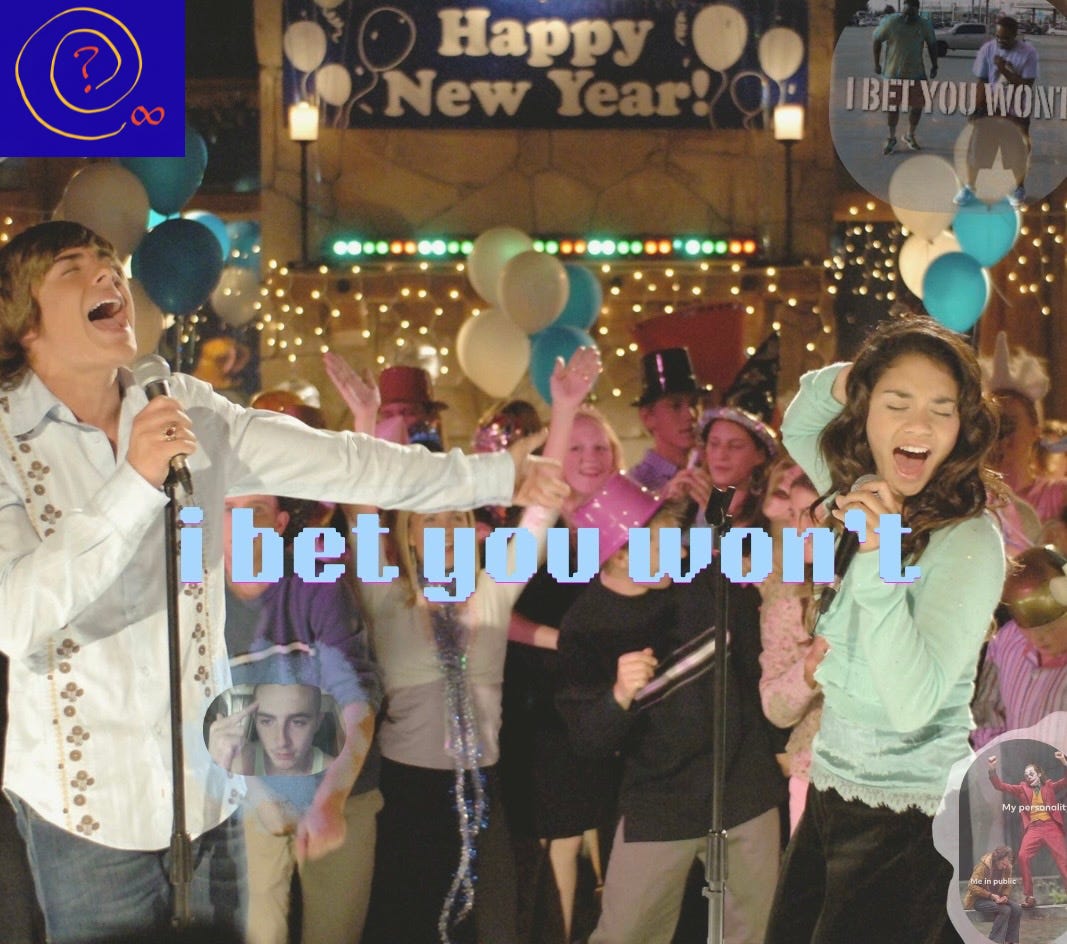
They do go. First hesitantly, then shamelessly. The song itself mirrors the transformation: living in your bubble (your perception) → forced to take a risk (society introduces friction) → you meet the challenge and your reality expands. From “my own world” to “something new.”
“Livin’ in my own world, Didn’t understand.
That anything can happen, When you take a chance.
I never believed in what I couldn’t see.
I never opened my heart, oh! To all the possibilities, ooh-ooh. ”Start of Something New: Drew Seeley, Matthew Gerrad, Vanessa Hudgens, Zac Efron
The karaoke host hands them new identities — singer, performer — that challenge the fixed images they’d believed about themselves in the past. The song wasn’t a generic pop cue just to dress the scene; it had soul and delivers the movie’s argument in miniature. They’d have stayed locked in their own worlds all night if the spotlight hadn’t “randomly” collied them together.
Thinking back on every party I’ve ever been to: no one has ever unexpectedly sung and danced, passionately and vulnerably, unless they were drunk. People barely want to pick the next song on aux, let alone attempt something they’ve never done before. Thinking back, how often do people even collide?
This scene shows a world where we can transcend our fears by taking risks together, in public. Action in the present moment doesn’t hand you a new life—it only wakes you up to what’s possible. Wake up to your chance to choose shame until you can be shameless comes moment by moment.
Next, “coincidence” puts them in the same class. Troy hesitates to tell his friends about the actual highlight of his winter break. He even tells Gabriella the guy she sang with “isn’t really him.” Gabriella tries to talk to her new friend Taylor about Troy, but Taylor immediately shuts her down based only on what Troy “symbolizes.” Suppression based on social fears is how we learn to silence our own hearts. If you can’t speak about your experience fearlessly, you become the censor of your soul.
Society is the first mirror we see ourselves in. Take a chance and look, but don’t be fooled by what you see.
Years later, it seems we’re still putting people into boxes. While role-playing HSM at recess as a kid, I remember my character assignment being unanimously decided. Someone would say, “You should play Taylor, because she’s Black.” We’d look at my skin, and remember hers. What could I dispute there? The obvious facts seem to have the final say.
I never spoke up, I was scared of being the alien. But didn’t yet see:
“I’M the alien worth exploring. Things on MY planet are extremely foreign and otherworldly.” — Sherry Ning
I was upset about being seen as Taylor, but I was completely missing the point then and reducing Monique Coleman’s craft in the process.4 The movie was never trying to teach anyone to become a particular character.5 It was teaching me to discover who I am beyond any category, and to protect that at all costs.
The truth was, I just wanted to play the main character. And the kids reducing me to a color probably wanted to play main characters too. I wasn’t curious about any relation I could’ve had to Taylor’s character because of my ego—I was reinforcing a stereotype of “Black” onto a character who wasn’t even written to be “Black” in the first place.6
In all reality, I related to all the characters in at least one way—enough to embody any of them for a short game at recess—but I still treated the characters like merchandise to try and change how I was being perceived. Dolls to collect and trade for status on the school playground.

The audition is the heart of the movie, because it shouts something so offensive to the status quo: trained performance can’t compete with vivid soul. It can come easy when it’s real.
Sharpay and Ryan are very polished, have very optimized movement, perfect timing, harmony, and on-point branding—yet their performance still reads as mediocre and fake. The teacher initially rejects Troy and Gabriella for showing up late, but then she overhears them singing. They’ve never done theater and they’re untrained.
And yet the roles fit them perflectly because it feels true. Here, they weren’t just “mathlete” or “ball player”—they transcend those categories as two people singing a song together. Their peers feel it instantly too. The skater cellist. The mathlete who hip-hop dances. The basketball player baker.
Duality is the first door open to your multiplicity. You feel at home wherever you’re honest with yourself, but honesty requires facing your fears first.
Fear is known to have two exits for animals: fight or flight. But Troy and Gabriella choose a third way, to create. Empowered by love, they named their fear, told each other they were scared to audition and then dove into it anyway. Together they created a beautiful sound, but still arrived to audition as individuals. Go your own way with your whole heart. When you follow your truth, the right people find you.
Your soul doesn’t need to earn belonging. Belonging lives in you, discoverable only once you’re brave enough to be honest to you.
Take #2: The Music Reveals the Irony
— watch this beauty —
No, no, no, no... Every divided clique comes together in song and dance. By irony or by design, it really doesn’t matter, the point is that we see it’s possible.
No one states the obvious: maybe it’s time to unlearn what you think you know. Instead, the decathlon team and the basketball team join forces to sabotage friends who are collaborating across clique lines—contradicting their own mission in service of fear.
Until you confront your fears, all you’re stuck with is only what you’ve known in the past. And the terrifying follow-up question is: what if that fear was never even yours to begin with? What if you’ve been serving someone else’s fear your whole life? Check that inheritance!
Sharpay takes action on her fears and sabotages the callback so that Troy and Gabriella miss their audition. Their friends immediately want revenge—a mob ready to act on pure emotions, but every flock needs a bellwether. Love is the principle that makes new creation possible; and Troy lights the way and says no to revenge. He chooses to work together, not against another.
So they hack the basketball game scoreboard and smoke out the chemistry lab for fun on a Friday night. But that’s exactly the kind of disorder we actually need in our lives. The basketball team learns to root for the decathlon team, and vice versa. This is what competitiveness in love used to look like: playful, collaborative, aimed at lifting everyone up.
There’s not a star in heaven you can’t reach, if you stop obeying boundaries of a category.
Troy is the first to name something wrong:
“Why am I feeling so wrong / my head’s in the game, but my heart’s in the song / she makes this feel so right, should I go for it / better shake this, yikes!”
— Get’cha Head In The Game: Ray Cham, Greg Wells, Drew Seeley, Zac Efron
Jonathan Haidt calls this the elephant and the rider. The rider is your rational mind that’s small and trying to steer. The elephant is your emotions stomping massive, instinctive, and fighting for control of the reins. In sync, you move forward. Out of sync, you drag your body where your mind doesn’t want to go.
Fear is how control systems are reinforced by people. When your rider and elephant are at war with each other, you’re too busy managing conflicts to question and investigate anything happening outside yourself. A divided person is one who can be controlled easily.
You see the division.
That game is the real confusion Troy is trying to parse.
Our senses are both honest and untrustworthy, depending on how much attention we’re actually paying to them when they arise.
With Sharpay, she follows Gabriella into the chemistry lab after seeing her with Troy, introduces herself, and panics after realizing Gabriella isn’t just beautiful—she’s intelligent too. Sharpay becomes afraid she can’t compete with that kind of duality. Instead of questioning the fear, her elephant screams, and she pulls the reins harder.
That’s why she dominates instead of connects. Sharpay’s choice foreshadows what happens to the franchise itself. HSM1 is about finding soul through friction. HSM2 is about losing soul through scale.
Scaling without asking what you’re amplifying, or why—without weighing the cost at every stage, and blinding yourself to what’s real is a recipe for a higher ignorance. Delusion. They chose spectacle, at any cost, just because it worked the first time. Where HSM1 opens with risk and play, HSM2 opens with a four-minute school’s-out dance number where nobody actually leaves school...
HSM eventually became referenced and reduced to hot people singing and dancing on film, and some people forgot the lessons. I put the status-quo lens back on too, and went back to motions of what I already knew. I didn’t internalize the hard questions it was asking me to revisit in my own life. I only revisited the movie for nostalgia. If you missed the social lessons too, maybe you only ever saw the surface— not what they were reflecting back at us.
Take #3: See Not… Mimetics Are Blinding
Barsocchini’s inversion was simple and brilliant: don’t write a musical for the theater kids to enjoy. Write one that the most popular jock in school would want to sing along too. Then they go and cast the most “cool jock guy” they can find, Zac Efron, to trigger the domino effect.
I call it the ReGeo Pokémon effect: following a symbol without understanding what it represents. In Mean Girls, Janis and Cady cut holes in Regina George’s shirt to humiliate her. The next day, every girl at school shows up wearing the same thing. They weren’t inspired by Regina’s confidence or her individuality. They didn’t even care why there were holes in her shirt. They just saw her, and blindly wanted to be her.
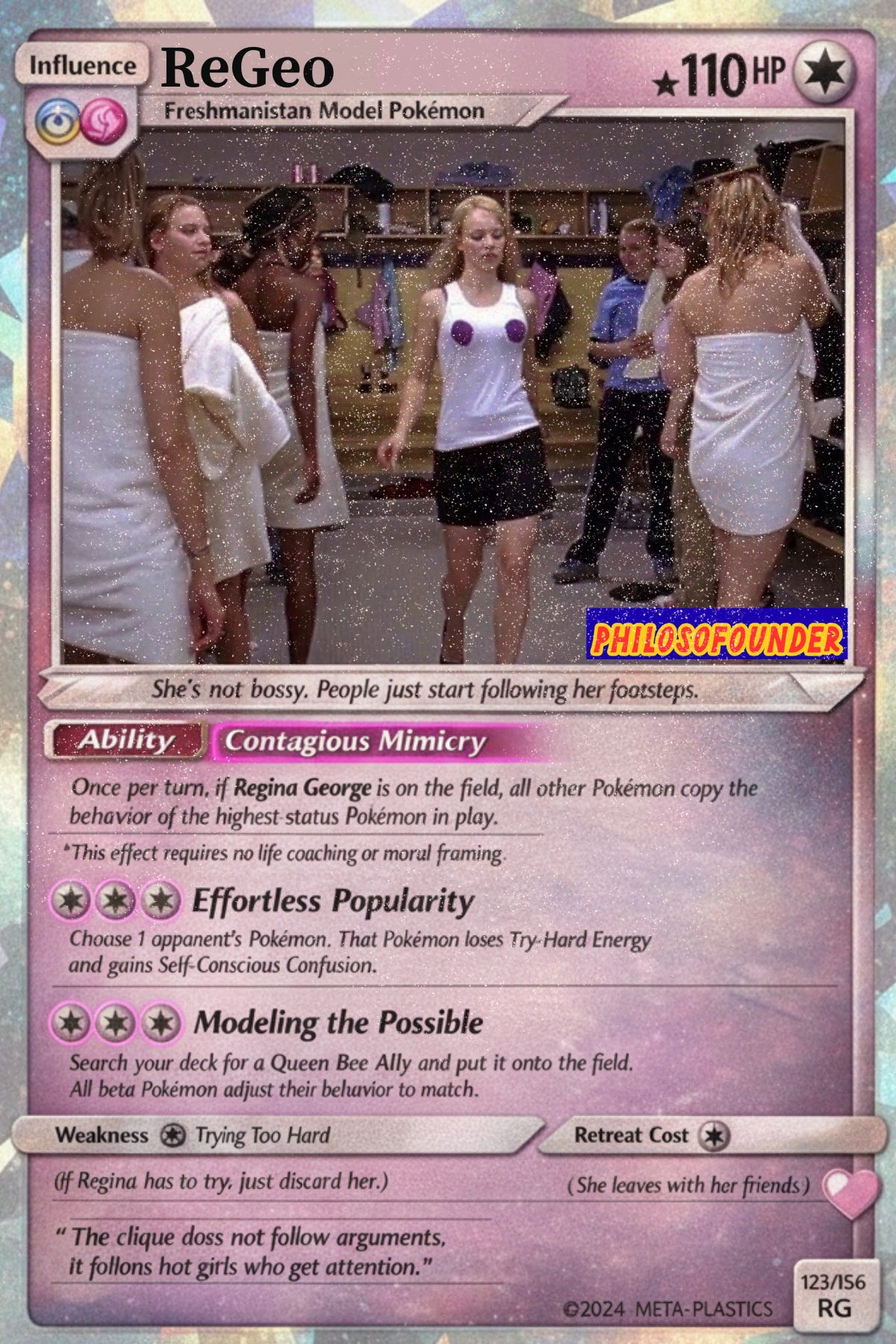
Troy exists in the same realm. Most people didn’t mimic him because they understood his courage or vulnerability, or because they wanted to embrace the same transcendence of category he’d found. They saw his looks and popularity as the value worth capturing, even though there was more underneath.
Troy and Gabriella became signals that something new was possible, and worth the risk. But the danger of being a signal is that the people following you for the wrong reasons kill your message the moment you stop trending.
If Troy Bolton can transcend his category, maybe you can too. But did it actually work? Did we see Troy as human, or just a heartthrob who happens to dance well? I had the Zac Efron backpack, so you know exactly how 7-year-old me was thinking.
Don’t seize meaning instead of sitting with the invitation people walk in with.7 Some of us sort Troy and Gabriella into “hot guy, smart girl, singers” instead of accepting the harder dare—rethinking why we box their “n of 1” experience in the first place.
René Girard tells us that mimetic desire is why this social categorization is nearly inevitable. Desire isn’t independent nor linear. We don’t want things because we want them; we want them because we saw someone else want them first. Sharpay doesn’t much care about Troy until she sees Gabriella does. Then he becomes everything.
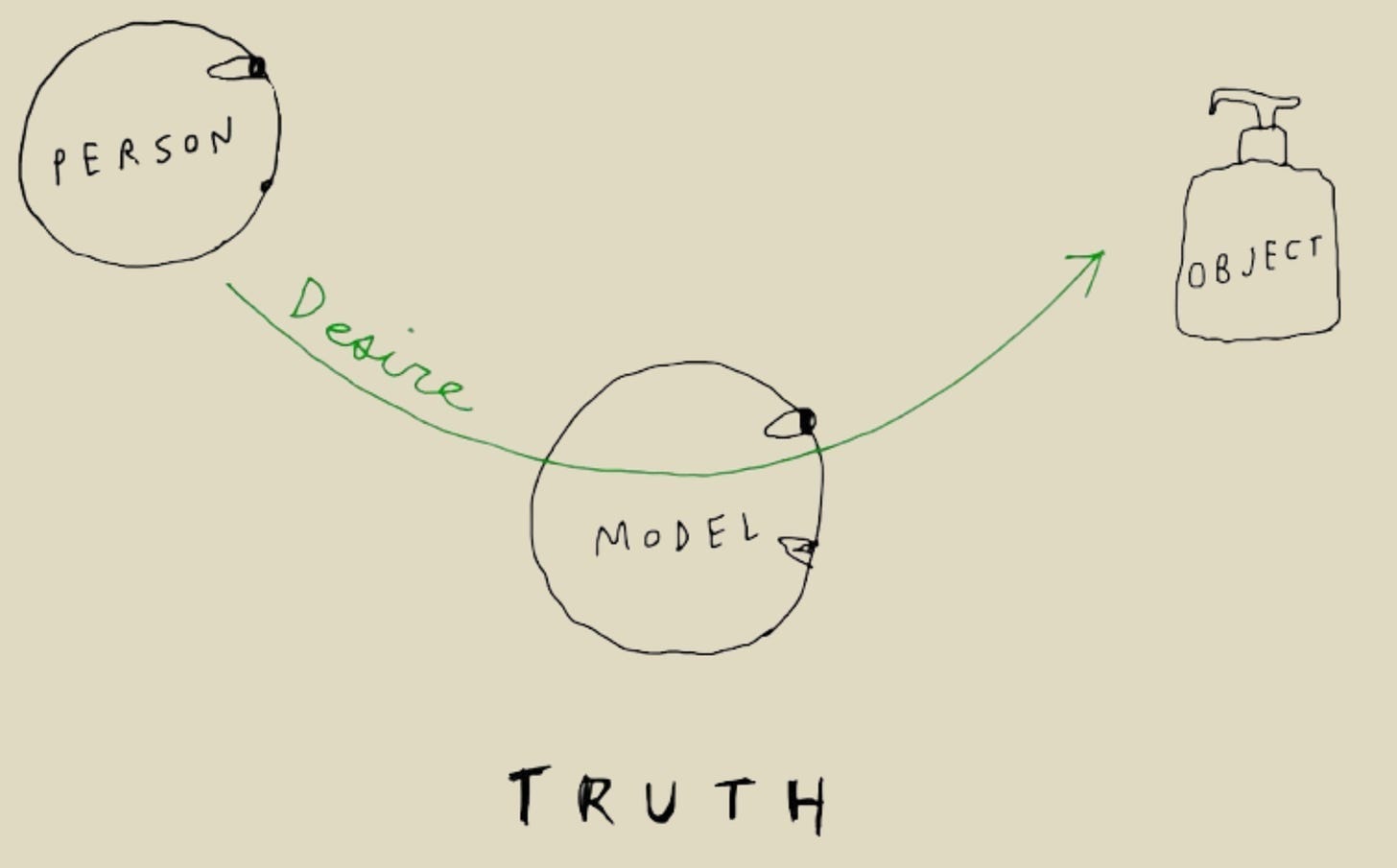
Control societies can’t help but scale bad mimicry. It keeps restocking the molds of celebrities, influencers, politicians. We consume and borrow their desires as our own. They’re everything we’re not, which is what makes them irresistible. It makes you think: if I become like them, or do what they do, maybe I’ll finally be enough. Maxxing. We copy the aesthetics—hair, costumes, merch. Troy became his own Regina George. But the moment he stopped being cool, we abandoned the lesson and went looking for a new molds.
The Mask
“We wear the mask that grins and lies,It hides our cheeks and shades our eyes,—
This debt we pay to human guile;
With torn and bleeding hearts we smile
…Why
…should the world be over-wise,
In counting all our tears and sighs?
Nay, let them only see us, while
…
We smile, but, O great Christ, our cries
To thee from tortured souls arise.
We sing, but oh the clay is vile
Beneath our feet, and long the mile;
- We Wear The Mask, Paul Laurence Dunbar (1895)
How much would it cost you to disbelieve the voice in your head? How much would you pay to be something you’re not? Look at these characters—obsessed with how they’re seen, and, in that distrust, surveilling each other constantly.
Chad is the perfect case study. He’s the first person personally offended by Troy singing, treating it like a betrayal of the whole basketball team. But in his big persuasion speech, Chad reveals an encyclopedic knowledge of music history. He secretly loves music as you see in HSM2. But he’s projecting his own repressed desire onto Troy to ever find that out about himself.
Have you ever felt personally threatened by someone else’s freedom?
Dunbar knew. You’re not for sale the moment you stop lying to yourself. Take the mask off—first, for yourself.
Take #4: See the Light
In HSM2, Troy gets a summer job from Sharpay at her family country club. He negotiates for his friends to join him, talks big about solidarity—and then Sharpay and the manager tempt him more with a promotion. He takes the bait. He takes the promotion and hides it. This is how control actually works—not through force, but small compromises that compound until you no longer recognize yourself.
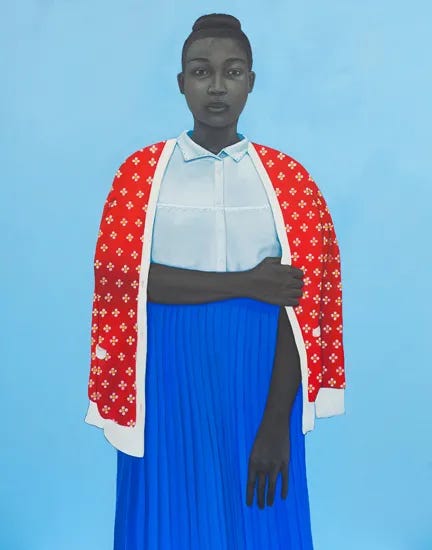
Control societies can fix becoming by capping discovery and exposure faster than you can process it. Be still. Most people only notice when it feels too late to change. Amy Sherald painted this experience—a woman who knew more about others than she knew about herself, never having had a map to discover who she was. Awkwardly, I felt her grip tighten around my own arm. That’s what control does in the mind: it makes puppets of people who only ever read the maps others drew for them, surrendering her own agency to draw a new one.
Troy’s dad warns him not to get left behind, at any cost. So Troy enters survival mode—cold. Fear and binary thinking condition you to treat people as objects, as means to an end.8 Warmth requires slowing down and seeing sideways. Seeing what’s actually in front of you. Troy humiliates his best friend over the wrong cheese on a sandwich, then acts surprised when his friends call him a sellout. His real mistake was never the promotion. It was lying to himself—trying to control what was never his to control.
iSpy: Someone appearing empty
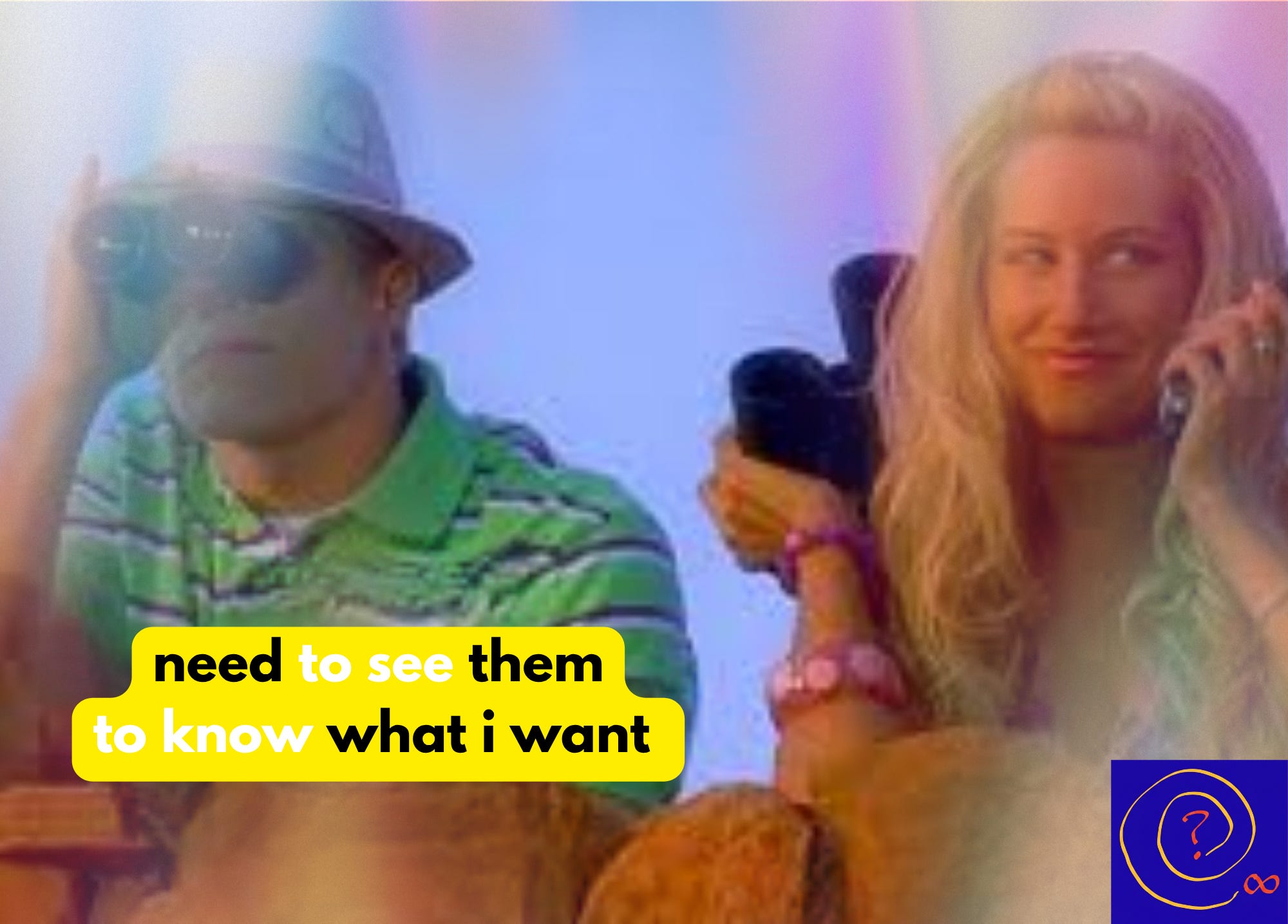
Sharpay has no life outside of HSM2. Her time is entirely consumed with winning and surveilling everyone else. Have you ever really seen her as an individual? For all her talent, she has no deep passions—just skills sharpened into weapons for winning. She goes after what she wants shamelessly, and doesn’t pretend otherwise, so there’s an honesty to her at least. Watching Sharpay is like watching a black hole consume itself endlessly.9
Sharpay displays limerence for Troy—an obsessive, dramatic, unrequited longing. She doesn’t want the love Ryan or her friends already offer. She isn’t looking for a real friendship or true love. She just wants the symbol of Troy. Her desire for him is a desire for what he represents. People become accessories to her, a means to an end.
Troy and Gabriella never reciprocate the same time she spends thinking about them. A control society is built from people treated as agents in service of a system that runs on deception—which is why, in every sphere of that world, truth feels like a threat.
Gabriella names her fear exactly:
“You might win Troy. You might win the talent show. But at what cost?”
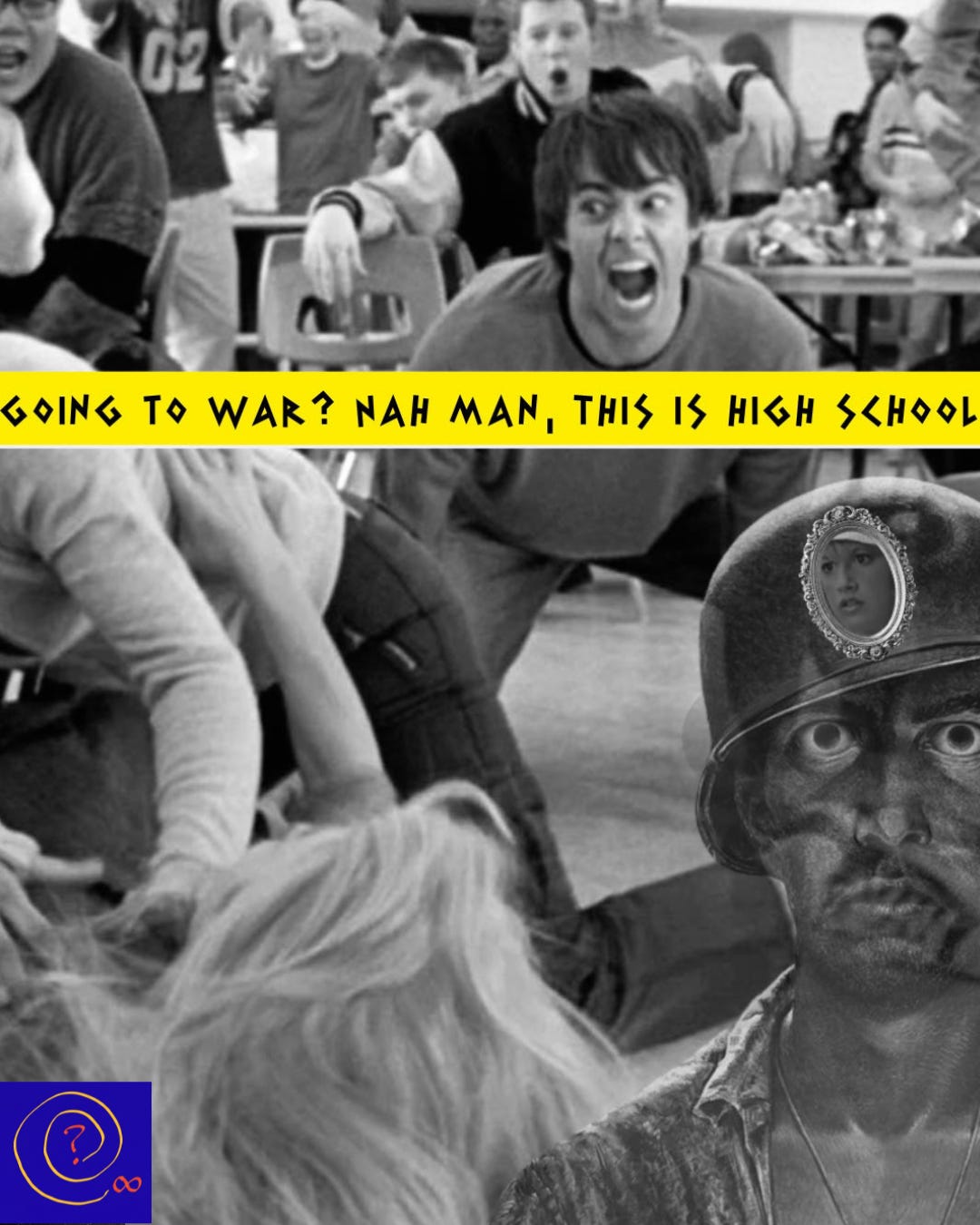
Sharpay goes blank. She already knows the cost because she’s living it. Winning might fill you temporarily, but it can leave you lonely. Those last echo of applause. The last comments of praise you keep refreshing your feed for. The foggy memory cheap validation leaves without the fullfilment of deep purpose.
It really is never enough. Troy overhears all of it and tries to apologize, but Gabriella hits him with a deeper truth: “I don’t recognize you anymore.”
This is the first moment the stakes get high enough for Troy to actually wake up and be a good friend. The next day, he walks out on Sharpay mid-rehearsal—potentially torching his new basketball scholarship. It reads as courageous until you realize his friends never asked him to do that...What they wanted was integrity in his words, not an impulsive sacrifice that could hurt his own future.
Don’t be like Troy here. Pause.
If you stop and feel, whoever is feeling—is the part of you that needs understanding most. Your inner self knows you best, it knows what makes you smile—but it’s so deep it often can’t tell you clearly what it knows it needs in time. Above everything else, guard your heart.
See the light.
Take #5: Surrender to Your Humanity
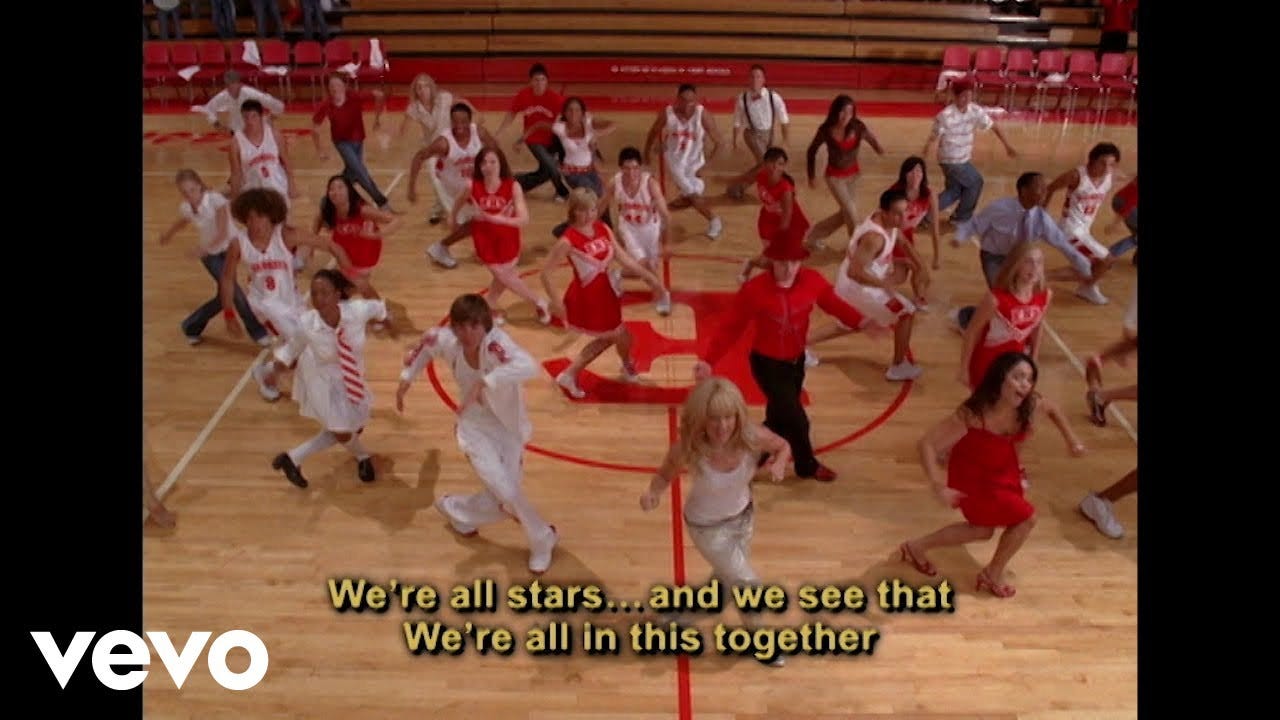
Troy doesn’t lose himself because he wants success. He loses himself because he starts selling out his relationships to secure a reward—trying to skip past his own darkness and go straight for the sun.
It doesn’t work that way. The only way out of his mess is apologizing and taking responsibility. Troy does it, eventually, and his friends forgive him almost effortlessly. But even that effortlessness reveals something: the supporting characters are mostly static—so don’t assume the effortless apologies in real life are always genuine.
Sharpay had control the whole time, but never any power over herself. The fix, fittingly, runs backward: Troy has to retrace his steps to what got him and his friends the job in the first place—Sharpay’s crush on him.
“If legitimacy is ruptured, the chain of roots is no longer meaningful, and the community wanders the world, no longer able to lay claim to any primordial necessity.”
— Édouard Glissant, Poetics of Relation, p. 52
Once the game reveals its own stupidity, you stop wanting to play. Sharpay is desperately grasping roots of meaning that were never really there—she has no relations, she’s hollow. The consequence of always looking up instead of sideways.
Relation is what gives you light. When you spot a crack in the wall, investigate it. The light gets brighter and brighter, until knowledge carries you through to the other side—to freedom.
The only control that ever really matters is self-control. How you react. What you choose. What you think. What you create.
Who are you becoming?
Take #6: Something New?
If you were like me, blindly claiming to be breaking free while wearing their faces on your pajamas—claiming their courage without doing the honest work of following your own heart and facing fear in your own life. Get to work on that! Live!
Did we fail to listen 1to the art or did the art fail to reach us? We know HSM didn’t fail artistically or commercially. It scaled the globe. But why did the message fail to scale? Was the noise too loud? The grand dance spectacles too shiny?
Luckily for us, the message is still alive burning in 2ø26, beneath all the glitter.
There’s not a star in heaven you can’t reach, if you stop blindly obeying status quo categories, don’t hide in the dark, don’t sell your integrity for feeling survival, choose the risk of being. Converge on values, not only symbol.
This is how I think the message under the art produces a changed reality. New creations are how we evolve, livin’ and stayin’ alive. Atleast that’s what I think for now.
Peace & blessings,
philoso ∞ the philosofounder

#FreedomForLove #MakeAmericaFreeAgain
IRL: Bay Area, CA {Fremont rn}
Email: mackenziemichellefisher@gmail.com
Call# (864)-907-9757
warm-Meetings: yo!! xD
Kenny Ortega is Bay Area seed, a cheerleader at Sequoia High School, and if you don’t know his grand portfolio of art—check this out!
Peter Barsocchini is from San Francisco
Monique nearly quit after being called back to audition for Taylor, she eventually agreed to it: “I connected to who I felt like Taylor could be to other people who needed more colorful role models. I really wanted my nieces and godsisters and just other girls like me growing up that didn’t have a role model… [to see themselves as] the smartest girl in school.”
or was it??
Sharpay and Ryan Evans were originally written to be Black characters, but then they found Ashley Tisdale. Thank God for that!
Glissant gives us the diagnosis: comprendre versus donner-avec. Comprendre — to understand — literally means “to seize.” To force something into your existing framework, take what you can comprehend, and discard the rest to save energy. Donner-avec means to give-with: to approach with generosity, and let something exist in its full complexity without demanding it conform to your categories.
Deleuze names the mechanism precisely:
“The corporation presents the brashest rivalry as a healthy form of emulation — an excellent motivational force that opposes individuals against one another and runs through each, dividing each within.”
— Deleuze, Postscript on the Societies of Control
“All addictions are a low-level search for God.”
— Carl Jung