

DOOM: Humans Aren't Even Human Anymore
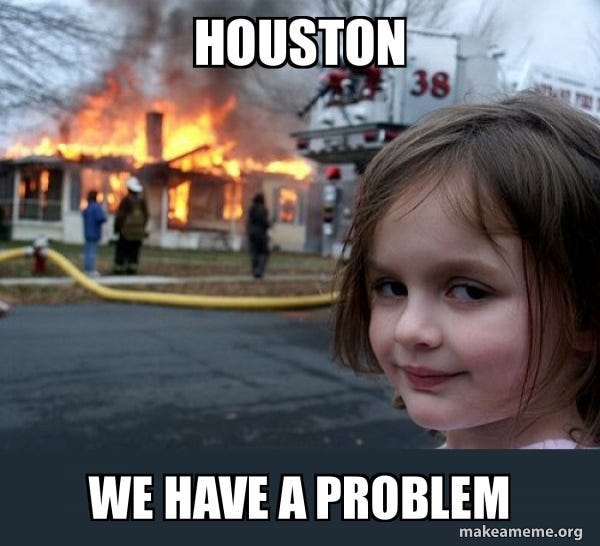
Humanity we have a problem: we’ve forgotten how to be human.

Our world increasingly operates on systems that outsource humanity itself to a few innovators, artists, and creators while relying on vast armies of billions of robots and zombies to keep the wheels of Earth turning. But now, as we enter the age of AI — and soon, Artificial General Intelligence (AGI) — that system is about to collapse. The future is coming fast, and it’s going to get ugly before it gets better…
The Three Archetypes: Robots, Zombies, and Plastics
To better understand this, let’s start with a heuristic from a cool dude from 1517 named Harry Gandhi.
Robots: These are the grinders — the doctors, engineers, lawyers, and other professionals whose value lies in their productivity. They focus on output, precision, and efficiency, operating like cogs in a machine. While necessary, their work often disconnects them from deeper human experiences.
Zombies: Zombies are the backbone of daily life, carrying out repetitive tasks that sustain society. They work nine-to-five, punch the clock, and live for distraction. Outside of work, they numb their minds with mindless entertainment, sometimes avoiding fundamental truths, introspection, or growth.
Plastics: Plastics are the hollow idols of consumer culture. They prioritize image over substance, maintaining a shiny exterior while lacking depth inside. Think influencers, celebrities, and those who focus on aesthetics and validation over authenticity.
AI & The Collapse of the Archetypes
We’ve created a system such that AI is poised to obliterate these archetypes and make us question what being a human even means. Machines will replace humans in almost every sphere:
Robots (Grinders): AI will be more efficient, precise, and tireless. Whether diagnosing diseases, coding software, or designing systems, AI outperforms human grinders at their own game.
Zombies (Sustainers): Routine tasks — whether in factories, offices, or service industries — are being automated already. The jobs that once kept zombies busy and floating by are disappearing at an alarming rate.
Plastics (Validators): Even the world of social validation is being infiltrated by AI-generated influencers, songs, art, films, virtual celebrities, and synthetic aesthetics. The line between real and fake is blurring, leaving plastics redundant.
The archetypes have thrived because they filled essential societal roles. But with machines taking over those roles, what’s left for humanity?
The Chaos of Transition
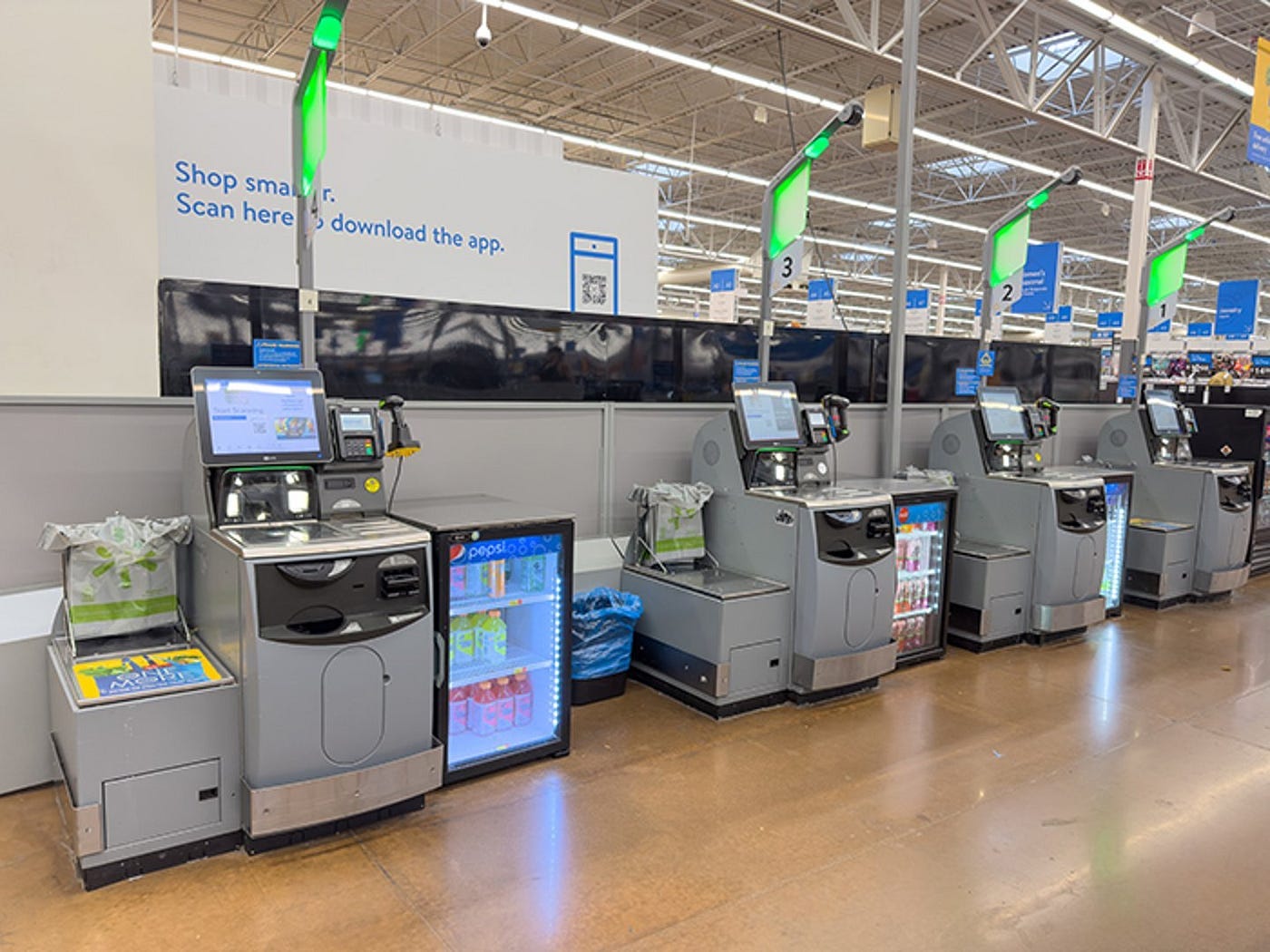
As robots and zombies are displaced, society will face profound upheaval. Unemployment will skyrocket, and the psychological toll of coming to terms with one’s lack of purpose will lead to widespread despair.
For centuries, people have defined their worth through their roles as robots, zombies, or plastics. Given how a majority of humans are already suffering a meaning crisis, the world will get ugly before it gets pretty.
Economic Disruption: Mass unemployment will hit both skilled and unskilled workers. The robots and zombies who make up the bulk of the workforce will have no clear path forward with automation.
Identity Crisis: Plastics, who rely on external validation, will struggle as AI-generated personas dominate cultural spaces. What does that mean for social media? AI-generated posts, profile pics, or status updates?
Social Unrest: The loss of purpose and structure will lead to widespread discontent, with many struggling to adapt to a world where their archetype no longer fits the overall structure of society.
It Gets Ugly Before It Gets Pretty, But Rome Wasn’t Built In A Day
To get there, we’ll need to rethink our systems: that means moving beyond rote memorization and standardized testing to cultivate creativity, critical thinking, and emotional intelligence through personalization. It also means we must use AI as a tool to free humans from drudgery, AI as human intelligence augmentation- not as a replacement for humanity itself.
The Future Belongs to Humans- Our Opportunity
For the first time in centuries, humanity has a chance to redefine itself. To step out of the roles of robots and zombies and reclaim what it means to be human. The irony is that this opportunity comes not despite AI but because of it. By taking over the repetitive, soulless work that once defined much of our lives, AI frees us to focus on what only humans can do: creating, connecting, and finding meaning. The age of robots and zombies is ending. The age of humans is just beginning. But only if we’re brave enough to seize it.
Rediscovering Humanity
The collapse of these archetypes forces us to ask a fundamental question: What does it mean to be human?
I started out thinking about Philosopher Thomas Nagel’s famous thought experiment, “What Is It Like to Be a Bat?” which explores the limits of understanding. A bat, with its echolocation and alien perception of the world, experiences reality in a way humans cannot fully comprehend. This motivates the mind-body problem — the challenge of reconciling our subjective experiences with the physical processes of the brain.
Nagel’s insight is profound: to be human is to live in the tension between what we know and what we can never fully know. It’s this mystery — this unresolvable gap — that defines humanity. And ironically, it’s this same gap that makes AI incapable of replacing us.
AI excels at answers, but it doesn’t ask questions. It calculates, but it doesn’t wonder. It builds, but it doesn’t dream. It understands, but it can never know. As AI takes over the roles of robots, zombies, and plastics, it clears the space for us to fully embody them.
Instead of grinding, maintaining, or posturing, humans can focus on what machines cannot replicate:
Building and Creating: Humanity’s greatest achievements come from the ability to imagine something that doesn’t yet exist and then bring it into being. From the Sistine Chapel to the internet, creation is what sets us apart. AI may assist in the process, but the vision — the “why” behind the “how” — will always be ours.
Making Art: Art is the expression of subjective experience. It’s messy, emotional, and deeply personal. While AI can mimic styles, it doesn’t feel joy, sorrow, pain, or wonder. Humans create art not to produce output but to process their existence, and that’s something AI can never truly understand.
Asking Questions: To be human is to be curious. The “stupid” questions — those that challenge assumptions and dig into first principles — are the seeds of progress. AI provides answers, but it’s up to humans to ask the questions that lead to breakthroughs.
Connecting and Meaning-Making: Machines can simulate empathy, but they don’t feel. Humans thrive on connection, vulnerability, and shared experiences. In a world where machines do the inhuman work, we have the chance to focus on relationships and purpose — the things that truly matter.
There’s a different kind of bravery it takes to be human. The kind that doesn’t fear failure in pursuit of greatness. The kind that asks “dumb” questions because not knowing is how we know. The kind that builds what it wants to exist in the world. Be brave, and find your humanity before it’s too late…