

I'm hurting: the invisible Elephant in My Living Room
you can't see me, but thanks so much America--happy 4th of July everyone 🇺🇸 😐

My stomach was in knots, the kind of deep nausea that hits when life gets too real, paralyzing you, making function impossible. I bolted outside for air, fumbling for my phone to call someone, anyone, but no one answered. This meant having to process this alone. When that happens, it’s time for a walk. I've debated sharing these feelings, but this isn't just my own story; it's the experience of many African Americans. I hope you find it helpful to know you aren’t alone in your invisibility this 4th of July.
I've been noticing a uncomfortable dynamic with my housemates. They're quick to pick up bits and pieces from my culture, but there's a baffling void of curiosity. I get that slang crosses lines, and social media blurs the origins of words. But these are supposed to be curious people. Yet, when it comes to me, it's crickets. I can count on one hand the amount of questions they've ever asked me about myself and culture. So, I've already felt like an outsider in such a diverse home. And honestly, I'm here to chase my passions, not to be anyone's cultural educator. Still, that knot in my stomach tightened. I tried not to dismiss them entirely as "racists," knowing that word makes many people squirm, but I firmly believe we all carry some embedded systems of it—a truth you'll see unfold in this essay.
It started subtly, with the everyday language. Practically every Gen Z person with a social media account uses AAVE (African American Vernacular English) in some way. "Yo," "my g," "homie," "big dawg"—these phrases are constantly present their conversations. Once, I gently tried to educate them. They use "big dawg" a lot, so I explained its origin from the Black Panther movie and its surge in popularity around 2016. Mostly, though, I let it go, just to avoid awkward confrontation. Three months is hardly enough time to uproot anyone's deep-seated biases.
Then came another incident that solidified my unease. Everyone was sharing the origins of their last names, I knew no one would ask me so when there was a gap, I jumped in and explained how plantations shattered families, how my ancestors were legally property, not human, and how multi-racial identities often emerged from rape. After I finished, the room fell silent. No one had a single question about that history, or even my own family, just one comment: "So that's why Malcolm X's last name is X?" A person then switched the topic, and I couldn't believe their lack of engagement.
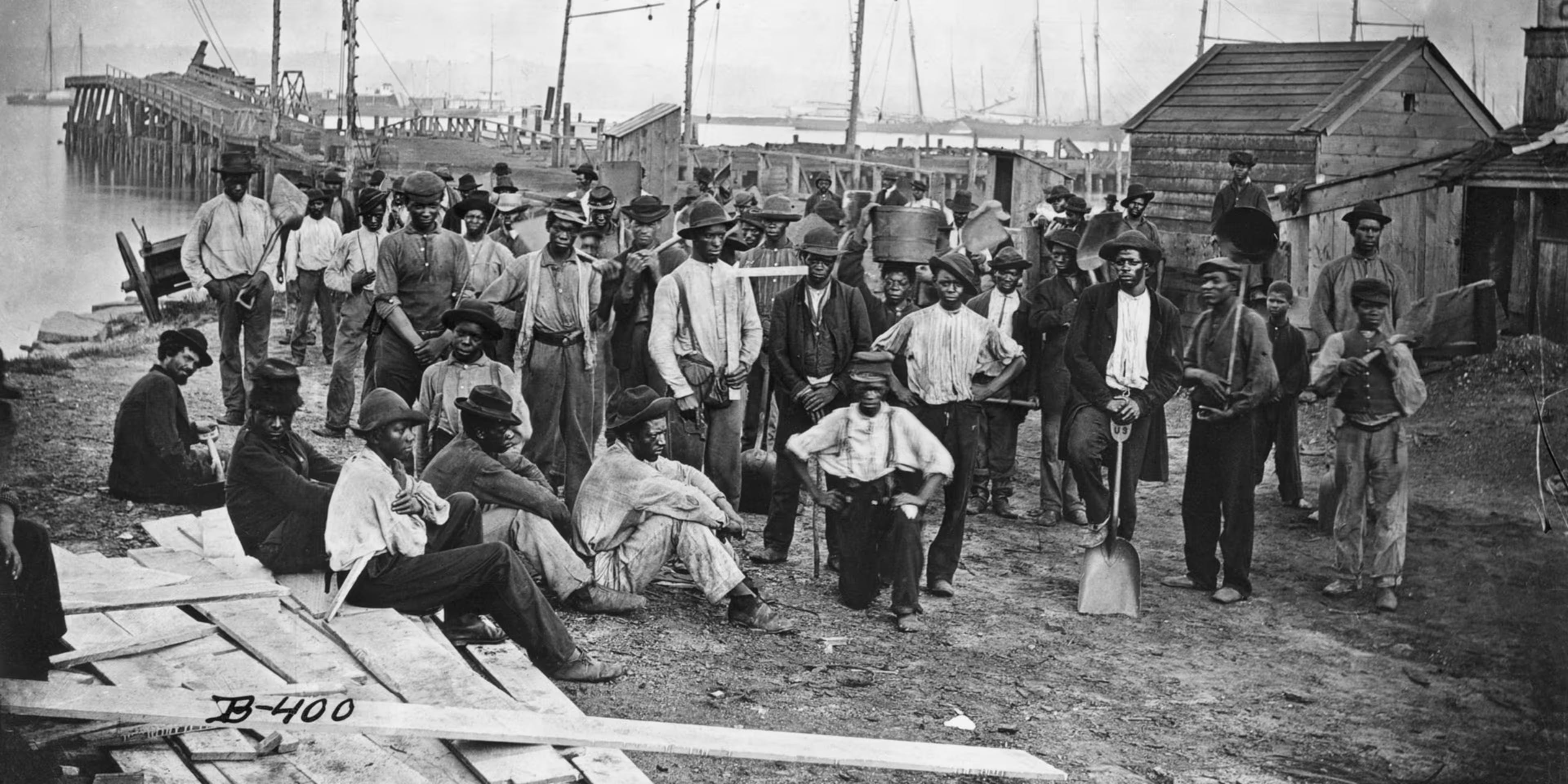
Next came my favorite holiday- Juneteenth. It’s the day we commemorate the emancipation of enslaved Africans, the only immigrants forcibly brought to America to build it. They were brutalized, forced to build this country while enduring unspeakable horrors: murder, starvation, rape, beatings, dismemberment, cannibalism, lynching, the violent separation of families, followed by 200 more years of legal and systemic injustices and policies that still ripple into today. Despite my intentional efforts to highlight its profound importance, even inviting them to a festival to learn about the very culture they silently erase with every borrowed “hip” handshake and "yo," not a single person said anything to me.
More recently, another awkward moment arose. Someone was eager to show me music videos and songs representing "his culture." I could see elements truly unique to his culture, but what made the videos truly interesting were the undeniable bits of my culture: dance moves from African American neighborhoods, Jordans, and beats inspired by hip hop artists. I'm no stranger to how communities across the globe borrow from African American dance and music. And here he was, showcasing a video clearly influenced by hip-hop, yet displaying absolutely no appreciation or even basic curiosity about my culture's indelible mark on that art form.
Perhaps discomfort is truly at the root of their behavior, but their discomfort just happens to be the source of what feels to me like the consequences of unconscious racism. Despite all of these experiences, my true frustration didn't fully ignite until today, July 1st. Canada Day. We're in America, by the way—it's not even a holiday here. Yet, the group enthusiastically went out of their way to celebrate our Canadian housemate. They bought her maple syrup, and then, the kicker: they actually cheered and asked her about the history behind the day. Curiosity wasn't hard for them after all. There was no awkward silence, just laughter and clapping that I could hear all the way from the bathroom on the other side of the house. I guess they just don't incorporate Canadian culture into their daily lives the way they do mine, so it’s okay to publicly express gratitude. The same person who celebrated Canada Day offered me nothing more than a casual "oh yeah, it's Juneteenth" when my day came. Even though I tried to be happy for her given our friendship, I just sat there, frozen and sick to my stomach.
The only people who wished me Happy Juneteenth were my mom and a kind stranger who saw me frowning on Market Street as I walked home with my peers. This, I realized, is the quiet reality of being African American in America. Most people don’t even know what that even means, and they don't care. Yes, I'm not being lynched or raped. Yes, I can vote and sit on the same side of the bus. But there's a more insidious burden: I don't even exist. My presence is avoided, my Blackness treated like an awkward elephant in the room. The only compliment they've ever given me was yesterday—"I like your hair"—after I'd just washed it... It felt so hollow, especially knowing they have zero curiosity or knowledge about black hair in general. I'm wrestling with complicated, conflicting feelings. Part of me genuinely thought we were friends, and I wanted to be happy and supportive. But another part is just seething with anger, hurt feelings, and resentment towards the fact we must live together and knowing that confrontation would only make this situation worse.
Now the Fourth of July is coming, and while being American is central to who I am, it's also a brutal reminder of the terror, pain, and death my ancestors endured for me to stand here today. And I'll likely spend that holiday, just like Juneteenth, surrounded by no one like me, no one curious, and no one who cares. I pray for my own peace, the kind I hope to find when I meditate on being in community with people who see me. So here I sit, listening to everyone below, laughing and having fun, while I harbor this enormous burden in my home and my heart.
This is the country I want to lead, and this is part of what I must navigate to learn how to support everyone. I am not angry, I do not blame anyone, rather I am channeling my emotions into narrative for those who feel alone in their invisibility. Thanks so much America… #happyearlybirthday
Contact me if you’ve experienced something similar and need a friend to talk to: mackenziemichellefisher@gmail.com