

Weekly Catch #6 🎣: memory, patterns, & creativity
No one's winning the AI race anytime soon MUWAHHAHA

Yo Yo Yo,
Last week, my mind was buzzing with some ideas that I believe are critical for understanding both ourselves as humans and the future of AI. It all started with Michael Levin's work on agential memory, which beautifully converges with my own framework, Sovereign Set Theory (SST). And leads to a powerful conclusion about who will truly shape the future.
*cues benevolent laugh*
Memory as a Self-Adapting Agent
Levin is all about resolving the persistence paradox. What I appreciated is that his ideas provide a biological/computational validation for many of the principles I explore with SST and SOULR.
Memories as Active Interpreters
Levin proposes that memory is more than passive storage. He argues that memories aren't just inert data; they are active, agential patterns that exert influence and even strive for their own persistence. He illustrates this with the fascinating case of the caterpillar-to-butterfly metamorphosis.
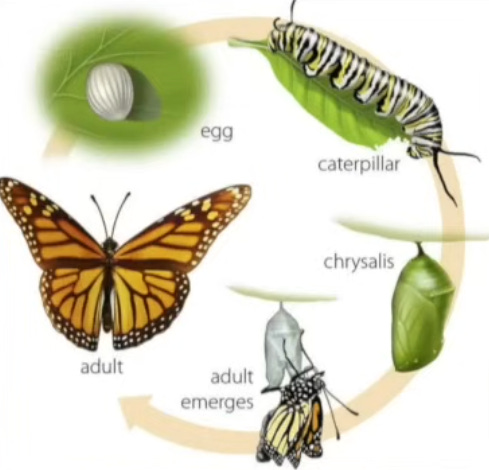
A caterpillar, with its specific brain and body, undergoes a radical transformation into a butterfly, possessing an entirely new neurological and physical structure. Yet, the butterfly retains memories from its caterpillar stage. This isn't simple data retrieval; it's a profound act of reinterpretation. The butterfly doesn't need the exact memories of crawling on leaves; instead, the meaning or salience of those experiences is re-mapped and becomes useful in its new three-dimensional, flying existence. For Levin, this is due to "self-improvising memory": memories that are dynamically re-evaluated and transformed by the present self to suit current needs. He argues that this ability to creatively reinterpret past information is a hallmark of biological intelligence.
Levin takes this even further, suggesting that persistent thoughts, like those in depression or OCD—can act as agents. They literally change the brain's physical structure to reinforce their own recurrence, a process he calls "niche construction." This highlights how biological systems embrace unreliability: they thrive not by rigidly adhering to fixed blueprints, but by constantly improvising and reinterpreting information to adapt and survive. This concept of memory as an agent is a core inspiration for SOULR. A question Levin can’t answer is what does it mean to store data/information in a way it can survive massive destruction and remodeling? My answer is the soul as the organizing logic.
The Enduring Self: Anchoring Identity in Authorship
If memory is constantly recontextualizing and transforming, a critical question arises: what provides continuity and anchors the persistence of identity? SST offers a model where every human ontologically is a sovereign set: a dynamic, evolving constellation of experiences, values, knowledge, desires, and even contradictions. Within this framework, the soul is not a static identity but the recursive logic of self-evaluation, revision, and integration. Identity, therefore, is not merely stored; it is authored and infinite (until death when set closes).
Philosophy Eats AI
Philosophers are not ‘technical’ technically, and it’s left me thinking what could I possibly contribute? Philosophers are often seen as existing in a realm separate from the hard sciences and engineering, far removed from the world of software. Yet, as Michael Schrage and David Kiron profoundly articulate in the MIT Sloan Management Review:
“Software is eating the world, and AI is eating software; what will eat AI? The answer is philosophy. Training, learning, and education are all philosophical constructs. AI finds patterns that relate to one another. The ability to meaningfully play with patterns and simulate. What are the patterns of purpose, and what are the purpose of patterns?”
Schrage and Kiron highlight a fundamental missing piece in many of today's AI systems: ontology. For those who don’t know what that is, ontology is the study of being – how we define what entities are and how they are composed. Without a clear ontological understanding of humans, AI systems lack the foundational frameworks necessary for true accuracy and coherence.
The success or failure of AI initiatives hinges less on technical execution and more on philosophical guidance. AI isn't simply a tool; it's a system of thought that embodies teleology (purpose), epistemology (how systems create knowledge), and ontology (what they define as real). This means philosophy isn't just abstract in the age of AI; it can be operational.
Being a philosopher, especially one deeply immersed in the metaphysical frameworks of human identity, is not a liability in the AI race—it's an advantage. While I don't care for "winning" in the sense of market dominance, I absolutely care about preserving and advancing humanity. And this is where philosophy, and specifically Sovereign Set Theory, provides the mental frameworks to do so.
Creativity In Action: Memory Mobiles
My biggest gripe with philosophers and even with philosophy as a subject itself has always been the volume of talking, debating, and questioning to determine the validity of a theory. While intellectual exploration is vital, I'm not interested in writing a book about Sovereign Set Theory or pursuing a PhD to validate my ideas. My driving purpose is simple: I want to see how implementing SST in the real world can make it a better, more human place.
For the past 5 months, the only launchpad ideas I envisioned were an operating system or advanced AI apps. But the inherent complexity of building something of that scale solo (non-technical really) made it difficult to abandon the "talking" for actual "building."
Then, serendipity struck this past weekend, Mason’s Substack invited me to his fidget camp showcase where I emotionally connected with two projects in particular.
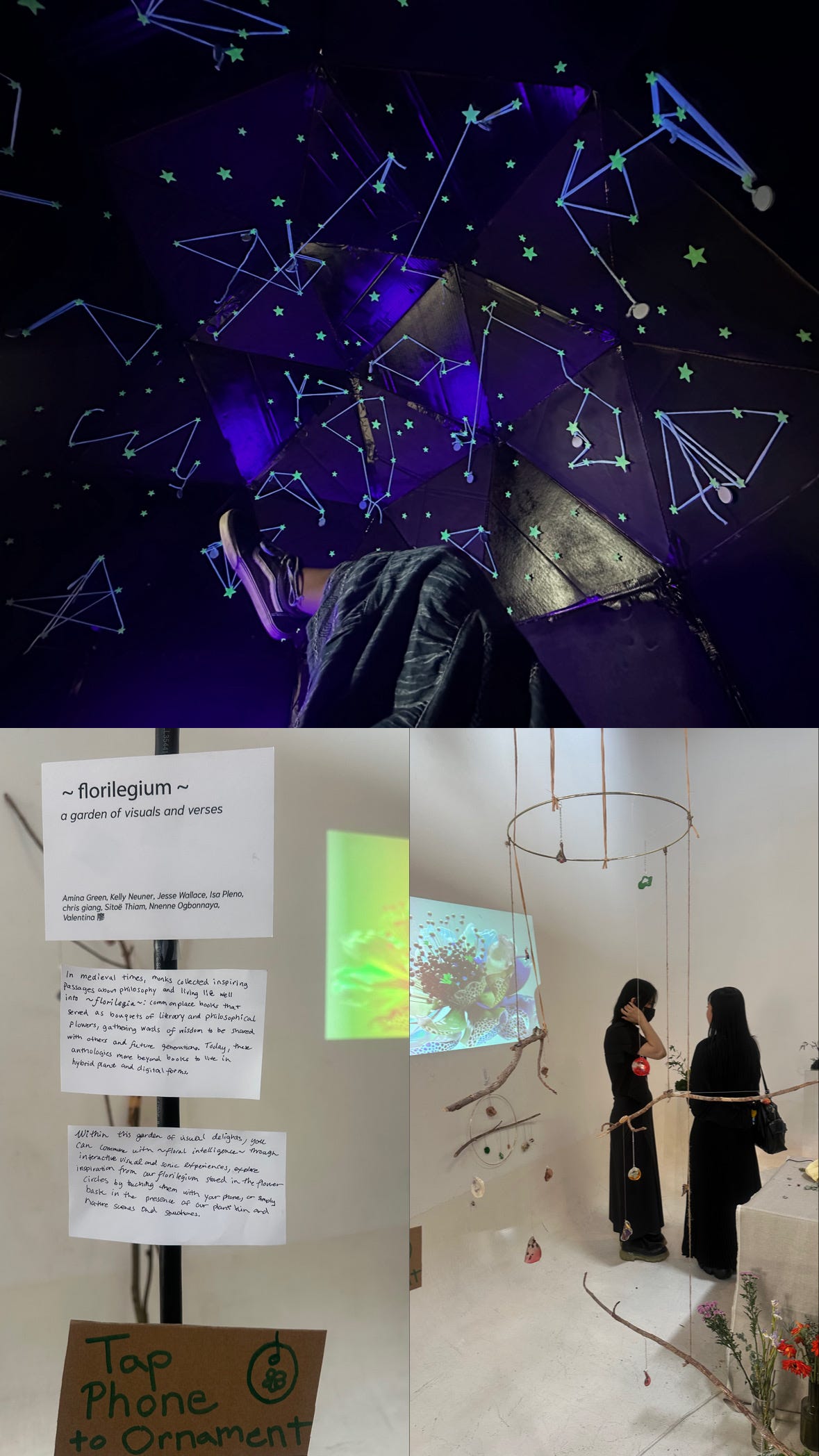
It hit me: Instead of starting with a full-blown memory engine, I should begin with something tangible and community-focused. I’m going to create star-shaped bioplastic ornaments with simple gold string, designed to be hung somewhere central in South Park.
Here's the twist: When you tap an ornament, you'll be invited to leave a 'soulprint'(name tbd)—a song, advice, a piece of knowledge, a verse, a poem, or even a URL. But to receive a soulprint, you must first share one for someone else. It's a direct exchange, fostering a deeper, more intentional connection. (all anonymous at the beginning)
Every tap will create a SOULR archive for you, allowing you to revisit the soulprints you've shared and received over time. This is our first real-world experiment to see how human intelligence can be curated, shared, and preserved in a truly unique way. #BetterTogether
I'll be recording my journey, from creation to installation, on X, Instagram, and maybe even TikTok. I'll share an update here once the ornaments are officially live in South Park!
People From Earth’s Core: Pattern or Purpose??
[final section haha]
Another highlight in my Michael Levin deep dive was a story he told about people from the center of the Earth. He used this science fiction analogy to illustrate a crucial point about perspective, scale, and the arbitrary nature of what we consider "real" or "agential" as humans.
He says:
“Imagine a species of beings that originate from the very core of the Earth. Because of their origin, they are incredibly dense. This means that to them, what we perceive as solid matter (like rocks, buildings, even our own bodies) are almost imperceptible, like a very fine mist or a nearly empty void. They would simply pass through them without noticing. Their senses are radically different from ours. Their vision might be in the gamma range, or perhaps they perceive density differences rather than light. As these beings work their way up to the Earth's surface, what do they observe? They don't see our physical bodies. Instead, they perceive all of humanity (and indeed, all living things and our creations) as a "very tenuous kind of plasma" or "gas" enveloping the Earth. To them, we are just "ethereal, wispy kinds of gaseous patterns" that exist around the planet. Much like we walk through a garden and barely notice patterns of pollen or faint smells in the air, these core-beings simply move through what we consider our physical world without registering its solidity. One of these core-beings is a scientist, and he's observing these interesting "gas patterns" (humans). He notes something peculiar about them: they seem to be "temporarily persistent patterns." They "kind of hang around for a while" and "seem to be doing things." He muses, "It's almost like they... they almost seem agential. They almost seem like they... move around and they try to protect themselves from dissipating and they have certain goals, desires, and it almost looks like they're doing stuff. The other core-beings dismiss his observations as "crazy." They declare, "We're real, we're physical patterns! Patterns can't be agential!" They also point out how long these patterns persist: "About a hundred years? That's nuts! Nothing interesting can happen in the space of a hundred years!" (This is a direct parallel to how we, as humans, might dismiss the "agency" of something that exists on a much faster or slower timescale than our own).”
I often reflect on the idea of patterns on the plane, whether looking at birds or observing the world. On the ground, everything feels so significant; humans seem so large, capable of perceiving so much, yet understand so little about our place in the universe. But when I look at ants, I assign so little value to their lives because it's difficult to grasp their perspective. I kill them without hesitation, never having seen the beauty of their colony, the families they feed daily, or the mesmerizing presence of the queen ant. From a plane, I often think about how we can barely perceive humans, how we become mere specks on the ground.
So Levin story, helped me find value in the patterns of pollen – perhaps to God, that's all we might be. But in the same way the ants keep building beautiful colonies, keep fighting to stay alive by searching for food, and keep serving the queen. We humans, despite our seemingly little significance in the vast universe, should keep playing our role as well. We're obviously here to love, given our biology and need for connection. We're obviously here to create, given our consciousness and creativity. And thanks to finitude, we're also here to live and enjoy the time we do have.
Even if we are just patterns, we're patterns with desires, knowledge, passions, skills, and, most importantly, with the agency to enact them in the physical world. We not just matter, we matter;)
Okay, I’m done lol!!